
Overcharging above the printed price, selling expired or adulterated food, false advertising, defective products and e-commerce orders that never arrive are everyday problems for Bangladeshi consumers. A consumer complaint in Bangladesh can be filed with the Directorate of National Consumers’ Right Protection (DNCRP) under the Consumers’ Right Protection Act 2009. The process is quick and inexpensive, and if the trader is fined, part of the fine may be paid to the complainant.
- The Consumers’ Right Protection Act 2009 makes a range of anti-consumer practices punishable, including overcharging, adulteration, false advertising, short weight and selling expired products.
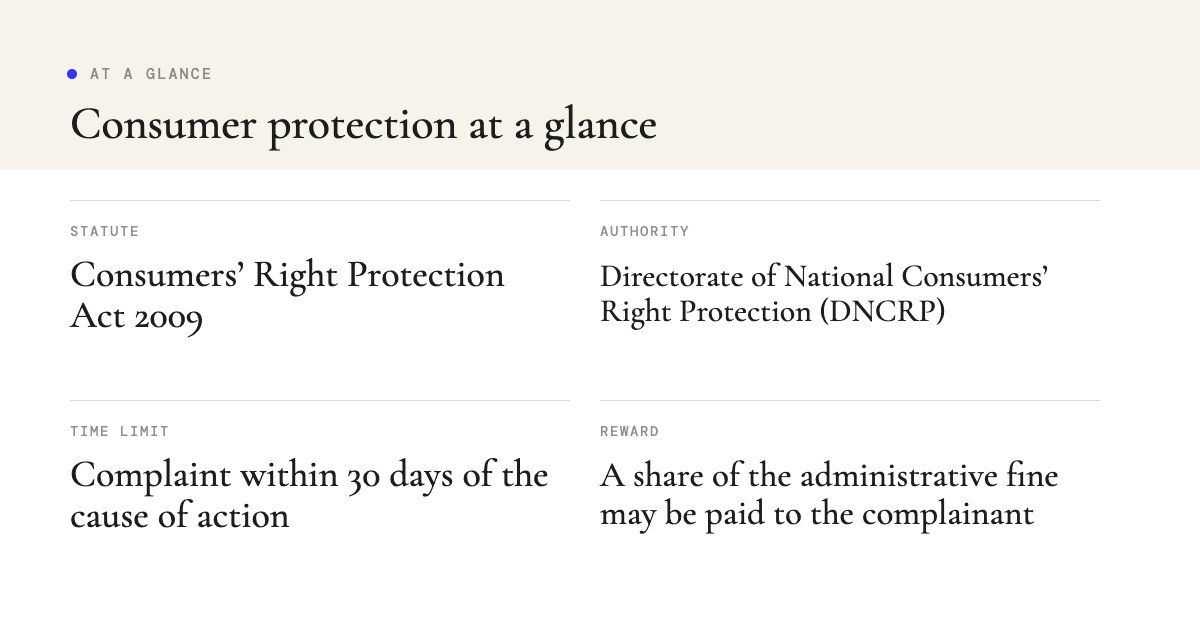
- Complaints are filed with DNCRP, in writing, online or through its channels, within 30 days of the cause of action.
- DNCRP can hold hearings and impose administrative fines, and a share of the fine may be awarded to the complainant.
- Serious violations can also lead to criminal prosecution, and consumers can sue for compensation in the civil courts.
- Keeping receipts, packaging, screenshots and photographs is essential to a successful complaint.
What counts as a consumer complaint in Bangladesh
The Act protects anyone who buys goods or services for personal use. It lists anti-consumer practices that are punishable, including selling goods or services above the fixed or printed price, selling adulterated goods or food, mixing prohibited substances in food, deceiving buyers through false advertising, failing to supply promised goods or services, short weighing or measuring, selling expired products, selling counterfeit goods, and endangering life or safety through negligence in services. Failing to display price lists in shops where required is also an offence.
The Act is available on Laws of Bangladesh, and complaint information is published by DNCRP. Our team, described on our about page and our consumer and retail practice, advises consumers and businesses on consumer protection.
Remedies for a consumer complaint in Bangladesh
| Route | Forum | Outcome |
|---|---|---|
| Administrative complaint | DNCRP | Hearing, administrative fine, share to complainant |
| Criminal prosecution | Magistrate court, on complaint by authorised officers | Imprisonment and fine for offences under the Act |
| Civil claim | Civil court | Compensation for loss or injury |
| Sector regulators | For example food safety, standards or telecom regulators | Regulatory action under sector laws |
Filing a consumer complaint in Bangladesh step by step
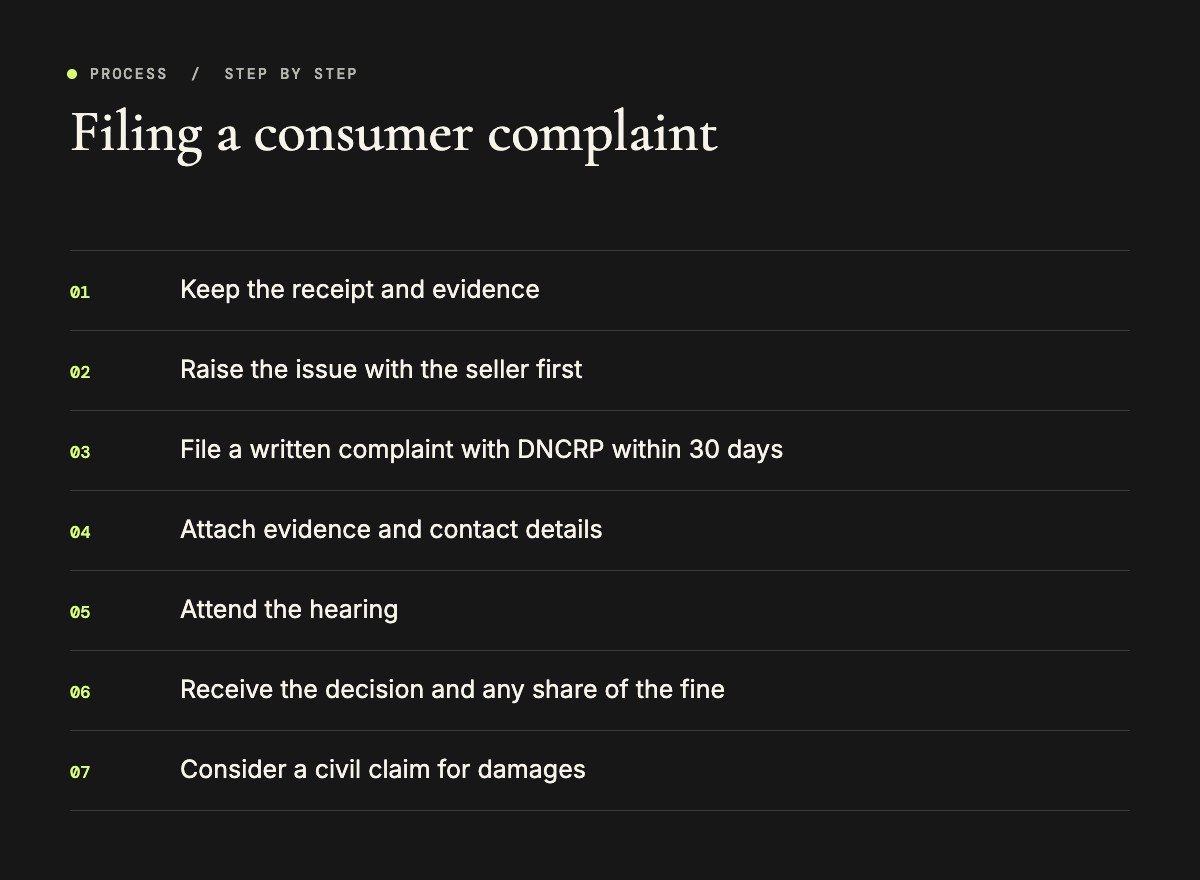
- Evidence. Keep the receipt or invoice, product, packaging, photographs and any messages or advertisements.
- Seller first. Where practical, ask the seller to fix the problem and keep a record of the response.
- Written complaint. File a written complaint with DNCRP within 30 days, online, by email or at its offices.
- Details. Include your name, address, phone number, the seller’s details, what happened and the evidence.
- Hearing. Attend the hearing in person or as directed, with original documents.
- Decision. DNCRP decides and may fine the trader; a share of the fine may be paid to you.
- Further action. Consider a civil claim if you suffered greater loss or injury.
The 30-day limit is strictly applied. File quickly, even if you are still negotiating with the seller, and include clear photographs of the product, price tag and receipt in the first submission.
The 30-day limit for a consumer complaint in Bangladesh
Section 60 of the Act requires a complaint to be made within 30 days of the cause of action. For a purchase, that is usually the date of purchase or the date the defect became apparent; for a service, the date of the deficient service. Complaints filed late may be rejected, so do not delay while waiting for a seller’s promises.
Hearings and fines on a consumer complaint in Bangladesh
DNCRP officers review the complaint, notify the trader and hold a hearing where both sides present evidence. If the trader is found responsible, DNCRP can impose an administrative fine within the limits set by the Act for the particular offence. Under section 76, where a fine is realised on a complaint, a share of the fine, commonly cited as 25 percent, may be paid to the complainant. DNCRP also conducts market drives and on-the-spot inspections, which can lead to fines independent of individual complaints.
E-commerce and the consumer complaint in Bangladesh
Online shopping complaints, such as non-delivery, delivery of a different or damaged product, refusal of refunds, and misleading discounts, are among the most frequent complaints received by DNCRP. The Digital Commerce Operation Guidelines issued by the Ministry of Commerce set expectations for delivery times, refunds and escrow-style payment systems. Keep order confirmations, payment records and screenshots of product listings and chats. For payment problems, also contact your bank or mobile financial service provider promptly.
Food and safety complaints
Adulterated or unsafe food can also be reported to the Bangladesh Food Safety Authority under the Safe Food Act 2013, and substandard products to the standards authority, BSTI, under its law. These regulators have their own enforcement powers, and serious food safety cases may be prosecuted in specialised courts. Information is available from BFSA and BSTI.
Civil claims after a consumer complaint in Bangladesh
Where a consumer has suffered significant loss or injury, for example from a defective appliance causing a fire or unsafe medical services, a civil suit for compensation may be appropriate. The Consumers’ Right Protection Act contains provisions for civil remedies, and general tort and contract principles also apply. Civil claims take longer than DNCRP complaints but can result in compensation reflecting the actual loss.
Services and professionals
Consumer protection extends to services, including transport, telecom, healthcare, education and repair services. Deficient services that endanger life or property, overcharging for services, and failing to provide promised services can all ground complaints. Telecom complaints can additionally be made to BTRC, and complaints about banks to Bangladesh Bank’s customer services channels.
How businesses should handle a consumer complaint in Bangladesh
Businesses should display prices clearly, avoid selling above the printed maximum retail price, check expiry dates, keep accurate weights and measures, ensure advertising claims are truthful, and have a clear refund and complaint policy. Responding promptly and fairly to customer complaints often prevents DNCRP proceedings. Where a complaint is filed, attend the hearing with documents showing compliance.
Writing an effective complaint
A clear complaint makes DNCRP’s job easier and improves the chance of success. Start with your name, address and phone number, then identify the trader with its name, address, website or social media page. Describe the purchase or service with the date, amount paid and what was promised. Explain exactly what went wrong, such as an overcharge above the printed price, a missing item, an expired date or a refused refund, and state what you want: a refund, replacement, or action against the trader. Attach copies of the receipt, photographs, screenshots and any correspondence.
Keep the language factual and avoid exaggeration. If several consumers were affected by the same practice, each can file a complaint, and coordinated complaints often prompt market inspections.
Overcharging and price display
Selling goods above the printed maximum retail price, or above a price fixed by the government, is among the most common violations. Shops are also required to display price lists for certain goods and services. Take a photograph of the product showing the printed price and of the receipt showing the amount charged. Overcharging complaints are usually straightforward to prove and frequently result in fines.
Counterfeit and substandard goods
Counterfeit cosmetics, medicines, electronics and food products pose real risks. Consumers who suspect counterfeits should keep the product and packaging and report to DNCRP, and where relevant to the drug regulator or BSTI. Brand owners can also take action under trademark and other intellectual property laws, as explained in our guide to trademark registration.
Healthcare and education services
Complaints about private hospitals, diagnostic centres, clinics and private educational institutions can concern overcharging, failure to provide promised services, or negligence. DNCRP can act on certain service deficiencies, while professional negligence claims may also be pursued in civil courts and through professional regulators. Keep all bills, reports and prescriptions.
Tips before making a consumer complaint in Bangladesh
Always ask for a receipt, check expiry dates and printed prices, pay through traceable methods for online orders, read refund policies before buying, and photograph products on delivery. These habits make it much easier to prove a complaint if something goes wrong.
Criminal offences under the Act
Beyond administrative fines, many anti-consumer practices are criminal offences under the Act, punishable with imprisonment, fine or both, with heavier penalties for practices that endanger life or health, such as adulterating food or selling fake medicines. Criminal cases under the Act are generally initiated on the complaint of authorised officers, and trials take place before Magistrates. Repeat offenders face enhanced penalties.
Reforms under discussion
Amendments to the Consumers’ Right Protection Act have been proposed to address digital commerce and to strengthen enforcement, but as of October 2026 the latest proposed amendment remains a draft. Consumers and businesses should rely on the Act as currently in force and watch for official gazette notifications.
When the trader is abroad
Complaints against foreign online sellers are harder to enforce, because DNCRP’s powers extend mainly to traders operating in Bangladesh. Where payment was made by card, consumers may be able to request a chargeback through their bank. Buying from local platforms with clear refund policies and cash-on-delivery or escrow options reduces risk.
After the decision
If DNCRP fines the trader, the complainant is informed of the outcome and, where applicable, of the process for receiving their share of the fine. The decision does not automatically refund the price paid, so consumers seeking a refund should say so clearly and may need to pursue the seller or a civil claim. Keep a copy of the decision for future reference, because it can support a later civil claim or a complaint to another regulator.
Group and repeated problems
Where many consumers face the same problem with one trader, such as a failed e-commerce platform, coordinated complaints and media attention often prompt faster regulatory action and, in some cases, criminal investigation of the operators.
Frequently asked questions about consumer complaint in bangladesh
Where do I file a consumer complaint?
With DNCRP, online, by email or at its offices.
What is the time limit?
Within 30 days of the cause of action.
Do I get money if the trader is fined?
A share of the realised fine may be paid to the complainant under the Act.
Can I complain about online shops?
Yes, e-commerce complaints are commonly handled by DNCRP.
What evidence do I need?
Receipts, the product or packaging, photographs and messages.
Can I also sue for damages?
Yes, a civil claim is possible for greater loss or injury.
How we can help
We advise consumers on filing a consumer complaint in Bangladesh and pursuing compensation, and help businesses respond to complaints, comply with pricing and labelling rules, and manage regulatory investigations. Learn more about our practice, our consumer and retail practice and our regulatory compliance services.
Cheated as a consumer?
We help you get the redress you deserve.
Book a consultationAbout usPrimary sources: the Consumers’ Right Protection Act 2009 and the Safe Food Act 2013 on Laws of Bangladesh; complaint procedures from DNCRP.
This article is general information about Bangladeshi law as of October 2026 and is not legal advice. Take advice on your circumstances.

0 Comments