
The environment court in Bangladesh is a specialised forum for trying offences and compensation claims under environmental laws, such as industrial pollution, illegal hill cutting, wetland filling and operating without environmental clearance. Established under the Environment Court Act 2010, these courts work closely with the Department of Environment. For affected communities, businesses and investors, understanding how cases reach the court is essential.

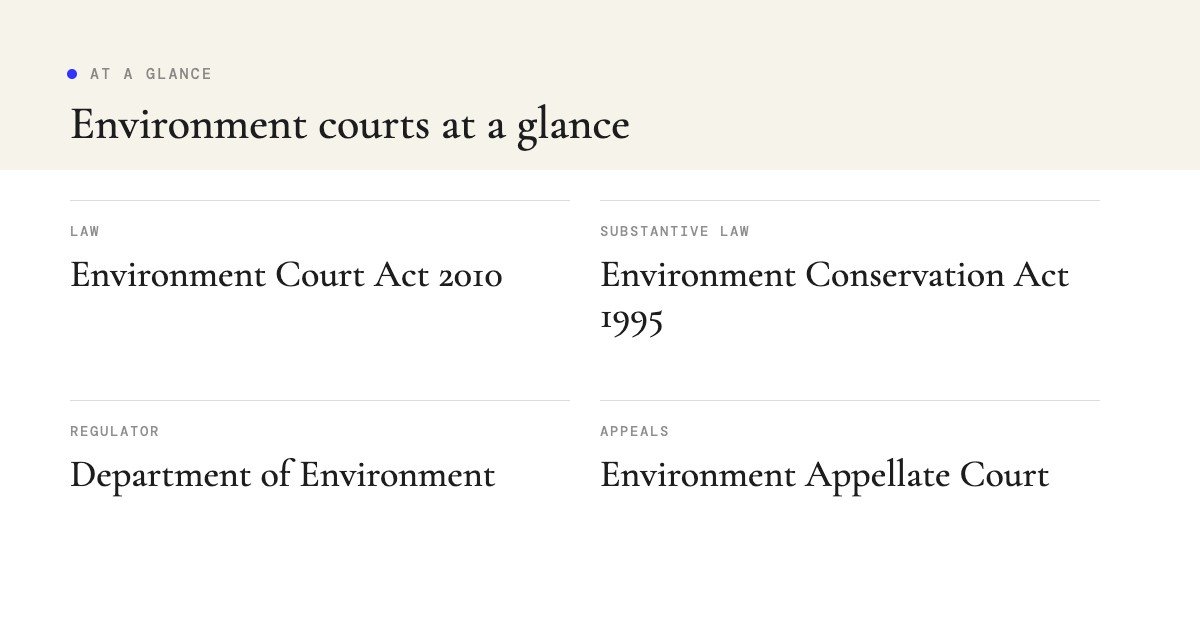
- The Environment Court Act 2010 provides for environment courts and an Environment Appellate Court to try environmental offences and claims for compensation.
- Cases usually start with a report or complaint by a Department of Environment inspector, though affected persons have a route to approach the court in specified circumstances.
- The courts apply the Environment Conservation Act 1995, the Environment Conservation Rules 2023 and other environmental laws.
- Penalties include fines, imprisonment, compensation and orders to stop or correct harmful activities.
- Businesses can reduce risk by maintaining environmental clearance, running effluent treatment plants and keeping compliance records.
Why environment courts exist
Bangladesh faces serious environmental pressures: river pollution from tanneries and textile dyeing, air pollution from brick kilns and traffic, hill cutting, wetland filling and loss of forests. Ordinary criminal courts were slow and lacked specialised expertise. The environment court in Bangladesh was created to provide faster, more focused adjudication of environmental offences and compensation claims, supporting enforcement by the Department of Environment (DoE).
Our environment and ESG practice advises businesses, investors and communities on environmental compliance and disputes.
The legal framework
| Law | Role |
|---|---|
| Environment Court Act 2010 | Establishes environment courts, the appellate court and procedure |
| Environment Conservation Act 1995 | Core environmental duties, offences and DoE powers |
| Environment Conservation Rules 2023 | Industry classification, clearance and standards |
| Brick Kilns Act (as amended) | Regulation of brick manufacturing and kiln locations |
| Other laws | Wetland, forest, water and biodiversity protection statutes |

Jurisdiction of the environment court in Bangladesh
Environment courts try offences under environmental laws specified in the Act and hear claims for compensation for environmental damage. The Act also provides for special magistrate courts to try certain offences, and mobile courts may deal with some violations on the spot. Appeals from environment courts lie to the Environment Appellate Court. Jurisdiction and the number of courts have expanded over time, so parties should confirm which court covers their area.
How cases begin
Under the Act, the environment court in Bangladesh generally takes cognisance of offences on a written report from a DoE inspector or authorised officer. An affected person who has suffered harm can notify the DoE and, if the DoE does not act within the time allowed, may approach the court directly under the procedure in the Act. This structure gives the DoE a central role but also provides a remedy when the regulator does not respond.
Affected communities should document pollution carefully: photographs with dates, water or air samples tested by recognised laboratories, medical records, crop losses and written complaints to the DoE. Strong evidence makes both regulatory action and court cases far more effective.
The Department of Environment's powers
Before cases reach court, the DoE can inspect facilities, take samples, issue directions to stop or correct activities, assess compensation for damage to ecosystems under the Environment Conservation Act, and in serious cases order closure or disconnection of utilities. Many matters are resolved administratively through compensation orders and directions. Businesses that receive DoE notices should respond promptly and seek legal advice, because inadequate responses often lead to prosecution before the environment court in Bangladesh.
Penalties and remedies
The environment court in Bangladesh can impose serious penalties. Offences under the Environment Conservation Act 1995 and related laws carry fines and imprisonment, with higher penalties for repeat offences. Courts can order offenders to pay compensation, restore damaged areas, stop harmful activities and confiscate equipment used in offences. Directors and managers of companies can be held responsible for offences committed by the company in certain circumstances. These consequences make environmental compliance a board-level issue.
Appeals
Decisions of the environment court in Bangladesh can be appealed. A person aggrieved by a judgment of an environment court can appeal to the Environment Appellate Court within the time prescribed. Further legal remedies may be available in the High Court Division on questions of law or through constitutional writ jurisdiction, which has been used extensively in environmental public interest litigation in Bangladesh.
Common types of cases
- Industrial effluent. Discharge of untreated wastewater from dyeing, washing, tannery, pharmaceutical and food processing units.
- Operating without clearance. Running industries or projects without environmental clearance under the Environment Conservation Rules 2023.
- Hill cutting. Unauthorised cutting of hills, a serious issue in Chattogram and the hill districts.
- Wetland and water body filling. Filling ponds, canals and wetlands for development.
- Brick kilns. Operating kilns in prohibited locations or without licences.
- Air and noise pollution. Emissions and noise exceeding standards.
- Hazardous waste. Improper storage, transport or disposal of hazardous and medical waste.
Each of these can bring a business or individual before the environment court in Bangladesh, often after DoE inspections or complaints from neighbours.
Evidence in environmental cases
Environmental cases depend heavily on technical evidence. Laboratory test reports, sampling procedures, chain of custody, expert opinions and DoE inspection reports are central. Defendants often challenge how samples were taken or tested. Businesses should keep their own monitoring records, such as effluent test results, ETP operation logs and electricity consumption data for treatment plants, which can show compliance. For the environment court in Bangladesh, credible technical evidence often decides the outcome.
Public interest litigation
Alongside environment courts, the High Court Division has played a major role in environmental protection through public interest writ petitions. Organisations such as environmental lawyers' associations have obtained orders on river pollution, relocation of tanneries, protection of rivers as living entities, brick kiln regulation and air quality. These cases often direct government agencies to act and can lead to further proceedings before the environment court in Bangladesh against specific violators.
Compliance for businesses
The best way to stay out of court is effective compliance. Businesses should obtain and renew environmental clearance, operate effluent treatment and emission control systems continuously, manage hazardous waste properly, keep monitoring records, train staff and respond promptly to DoE directions. Buyers, lenders and investors increasingly require environmental due diligence and ESG reporting, so compliance also supports commercial relationships. A single prosecution before the environment court in Bangladesh can damage a brand's reputation with international customers.
Compensation for affected communities
Pollution can destroy crops, fisheries and livelihoods, and harm health. Affected persons can seek compensation through the DoE's compensation assessment powers, through the environment court in Bangladesh, or through civil claims. Collective action by communities, supported by lawyers and NGOs, often produces better results than individual complaints. Documenting losses carefully and acting promptly strengthens claims.
Defending an environmental prosecution
A business facing charges before the environment court in Bangladesh should act quickly. Key steps include obtaining the DoE report and test results, reviewing sampling and testing procedures, gathering the company's own monitoring data and clearance documents, identifying any procedural defects, and considering remedial measures that show good faith. Sometimes negotiating with the DoE on corrective action and compensation can resolve matters or reduce penalties. Legal and technical experts should work together to prepare the defence.
Environmental clearance and the courts
Many prosecutions concern operating without valid environmental clearance or breaching clearance conditions. Under the Environment Conservation Rules 2023, industries are classified by environmental impact, and higher-category projects require environmental impact assessment and stricter conditions. Clearance must be renewed on time. Expired clearance is one of the easiest violations for the DoE to prove, and it frequently leads to cases before the environment court in Bangladesh. A compliance calendar for renewals avoids this risk.
Role of mobile courts
Mobile courts under the Mobile Court Act 2009 often conduct drives against polluting industries, illegal brick kilns, polythene production and hill cutting, imposing fines on the spot. Mobile court action is fast but limited in scope; serious or contested matters usually proceed before the environment court in Bangladesh or special magistrates. Businesses fined by mobile courts should review compliance immediately to avoid repeat violations and harsher penalties.
Practical checklist for businesses
- Keep environmental clearance current and comply with its conditions.
- Operate effluent treatment and emission controls continuously.
- Maintain monitoring and testing records.
- Respond promptly and in writing to DoE notices.
- Train staff on environmental duties and incident reporting.
- Take legal advice early if prosecution is threatened.
Investors and lenders
Foreign investors, development finance institutions and banks assess environmental risk before investing or lending. Pending cases before the environment court in Bangladesh, DoE compensation orders or repeated violations can delay financing, trigger loan covenants or reduce valuations in acquisitions. Environmental due diligence should review clearances, monitoring data, complaints, notices and litigation. Sellers can improve deal outcomes by resolving outstanding issues before going to market.
Timelines and practical realities
Although the Act aims for speedy trials, case backlogs, adjournments and the need for expert evidence can extend proceedings. Settlement through corrective action and compensation, where the law allows, may resolve matters faster. Parties should plan for the possibility of a long process, keep evidence organised and remain engaged at each hearing. The environment court in Bangladesh continues to develop its practice as environmental awareness and enforcement grow.
Climate change and future litigation
Bangladesh is among the countries most vulnerable to climate change, facing sea-level rise, salinity, floods and cyclones. Climate litigation is growing worldwide, and Bangladeshi courts have already shown willingness to protect rivers and ecosystems through public interest cases. Future disputes may involve emissions, adaptation obligations, environmental impact assessments for large projects and corporate climate disclosures. Businesses should expect environmental scrutiny to increase, not decrease, and should build robust compliance and reporting systems now. Early investment in cleaner technology often costs less than penalties, compensation and lost business after a prosecution, and it positions the company well with buyers, lenders and regulators who increasingly reward strong environmental performance.
Frequently asked questions about environment court in bangladesh
Which law created environment courts?
The Environment Court Act 2010, which replaced earlier legislation and provides for environment courts and an appellate court.
Can an affected person file a case directly?
Generally the DoE reports offences, but an affected person can approach the court if the DoE fails to act within the time allowed after notice.
What offences do these courts try?
Offences under environmental laws such as pollution, operating without clearance, hill cutting and wetland filling.
Can the court award compensation?
Yes, environment courts can order compensation for environmental damage.
Where do appeals go?
To the Environment Appellate Court.
Are company directors liable?
They can be, where offences by the company are attributable to them under the law.
How we can help
We represent businesses and affected parties before the environment court in Bangladesh and the DoE: compliance reviews, responses to notices, compensation assessments, prosecutions and appeals, and public interest litigation. Learn more about our environment and ESG practice.
Facing a DoE notice or environmental dispute?
We assess your position, prepare evidence and represent you before regulators and courts.
Book a consultationEnvironment practicePrimary sources: the Environment Court Act 2010 and Environment Conservation Act 1995 on the Laws of Bangladesh portal; clearance and enforcement information from the Department of Environment.
This article is general information about Bangladeshi environmental law as of October 2026 and is not legal advice. Court jurisdiction and procedure may change; take advice for specific cases.




0 Comments